
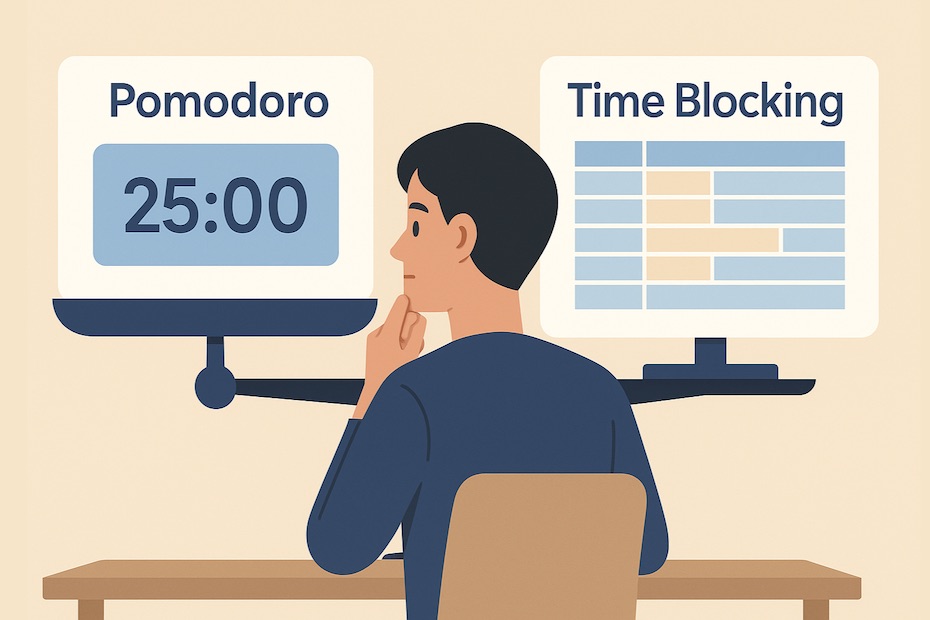
Pomodoro works best when you need structure, frequent breaks, and motivation to start, while Time Blocking is ideal for deep work, long sessions, and daily planning.
You need a system that helps you focus, sustain energy, and finish tasks consistently. In this article, you’ll compare Pomodoro and Time Blocking in depth, explore real-world pros and cons, and learn how to match each method to your study habits. By the end, you’ll know whether Pomodoro, Time Blocking, or a hybrid approach will help you maximize productivity.
What is the Pomodoro Technique?
The Pomodoro Technique breaks work into short bursts of focus with structured breaks. Traditionally, you study for 25 minutes, then take a 5-minute break, repeating four cycles before a longer rest.
This method is simple and beginner-friendly. The clear cycle makes it easier to start tasks you’ve been avoiding, because you commit to just 25 minutes instead of hours. It also prevents burnout by forcing breaks even when you feel tempted to power through.
Students often use Pomodoro when tackling repetitive tasks, reviewing notes, solving practice problems, or reading assigned chapters. The rhythm builds momentum and keeps distractions in check.
What is Time Blocking?
Time Blocking organizes your day into specific blocks, each dedicated to a category of work or subject. For instance, you might schedule 9:00–11:00 AM for research, 11:00–12:00 for writing, and 1:00–3:00 for group work.
Unlike Pomodoro, blocks vary in length. You could schedule a short block for lighter tasks or reserve two or three hours for deep work. The strength lies in forward planning—you know exactly what to focus on during each part of the day.
Many students and professionals use Time Blocking as a calendar-driven system. It reduces decision fatigue and ensures priorities receive time before smaller tasks crowd them out.
How do Pomodoro and Time Blocking compare in effectiveness?
Both methods have been studied in academic and workplace contexts. Evidence shows that systematic break schedules, like Pomodoro, can improve concentration and reduce distractions. Students following fixed intervals often stay engaged longer than those relying on self-regulated breaks.
On the other hand, Time Blocking encourages proactive planning. By mapping out tasks ahead of time, you align work with your peak energy hours. This approach prevents procrastination on big projects, as you’ve already committed calendar time to them.
Effectiveness often comes down to task type. Pomodoro is more effective for small, repetitive tasks, while Time Blocking is better for long-term assignments and deep learning.
What are the advantages and drawbacks of Pomodoro?
Pomodoro’s biggest strength is lowering the barrier to starting. Knowing you only need to commit to 25 minutes helps you tackle overwhelming tasks. The structured breaks also keep your brain refreshed.
You gain:
- Sharper focus for short tasks
- Consistent energy throughout study sessions
- Lower resistance to getting started
- Better balance between work and rest
But the method has limits. Interruptions from timers can disrupt flow when you’re immersed in deep work. Complex tasks may require longer focus than a single Pomodoro allows. And if you’re already disciplined, the rigid structure may feel unnecessary.
What are the advantages and drawbacks of Time Blocking?
Time Blocking’s strength lies in full-day structure. By assigning blocks in advance, you create accountability and ensure priorities come first. It works well for balancing multiple responsibilities, from classes to part-time jobs.
Benefits include:
- Clear daily roadmap with tasks assigned
- Better alignment with energy peaks and lows
- Control over long-term projects through planned sessions
- Lower chance of distractions hijacking your schedule
But drawbacks exist. Estimating time for tasks can be difficult, leading to unrealistic schedules. Unexpected interruptions can throw off the plan. And without built-in breaks, fatigue can creep up silently, reducing quality.
Which method fits different study tasks?
Your choice depends on the nature of your tasks and your energy levels.
Use Pomodoro when:
- Tasks are small or repetitive
- You face frequent distractions
- Motivation is low and starting feels hard
- You want structured breaks to avoid burnout
Use Time Blocking when:
- Tasks require deep focus for hours
- You’re managing multiple priorities
- Projects span weeks or months
- You want to align tasks with energy peaks
Many students find blending both works best—planning days with blocks, then using Pomodoro cycles within those blocks to maintain concentration.
What do real students say about both methods?
On Reddit and Quora, students consistently describe Pomodoro as a lifesaver when procrastination hits. One student wrote: “I use Pomodoro whenever I’m struggling to start—just 25 minutes feels manageable, and usually I keep going after that.”
Others highlight the flexibility of Time Blocking. A Quora contributor explained that blocking study hours on a calendar gave them structure and balance, but admitted it required constant adjustment when tasks took longer than expected.
Common advice from students is to avoid rigid loyalty to one method. Instead, adapt based on workload: Pomodoro for scattered or distracted days, Time Blocking for structured weeks with major deadlines.
Can you combine Pomodoro and Time Blocking?
Yes—you don’t need to choose one permanently. A hybrid system often gives you the best results.
For example, block two hours in the morning for exam prep. Inside that block, divide the session into four Pomodoros with breaks in between. That way you preserve long-term structure while keeping focus sharp.
You can also extend Pomodoro intervals. Some students use 50 minutes on, 10 minutes off instead of 25/5. This modification works better inside longer blocks and for deep work sessions.
Practical tips to implement each method effectively
To make either method work for you, consistency and reflection matter.
- Track your energy levels daily for one week to identify your best focus times.
- Use apps like Forest or Focus To-Do for Pomodoro, and Google Calendar or Notion for Time Blocking.
- Build buffer periods into Time Blocking schedules to absorb unexpected tasks.
- Experiment with Pomodoro lengths—don’t force 25 minutes if 40 works better.
- Review weekly: which tasks were completed on time, which dragged, and adjust your method accordingly.
The right adjustments turn these methods from theory into practice that matches your life.
Which Time Management Method Works Best?
- Pomodoro: Short 25-minute focus sessions with breaks, ideal for avoiding distractions.
- Time Blocking: Planned calendar blocks, perfect for deep work and managing multiple priorities.
In Conclusion
Pomodoro and Time Blocking are both powerful, but the right choice depends on your study style. Use Pomodoro when motivation or focus is low and tasks are short. Use Time Blocking when projects require hours of uninterrupted concentration or when you need daily structure. For most students, combining the two brings balance—planning big blocks for priorities, then using Pomodoro cycles to execute with focus.
For more personalized strategies to master focus and productivity, visit my X Profile—you’ll gain proven tools tailored to your study and career growth.

Yitz Stern is a New York–based entrepreneur and business consultant with 20+ years of experience in alternative funding and real estate. A former CEO of Fundry and managing director at Tiger Financial Technologies, he now advises mid- to large, non-public companies on capital strategy and scalable growth while investing in multifamily real estate